FAIR: making data findable and reusable
27 October, 16:45-18:15.
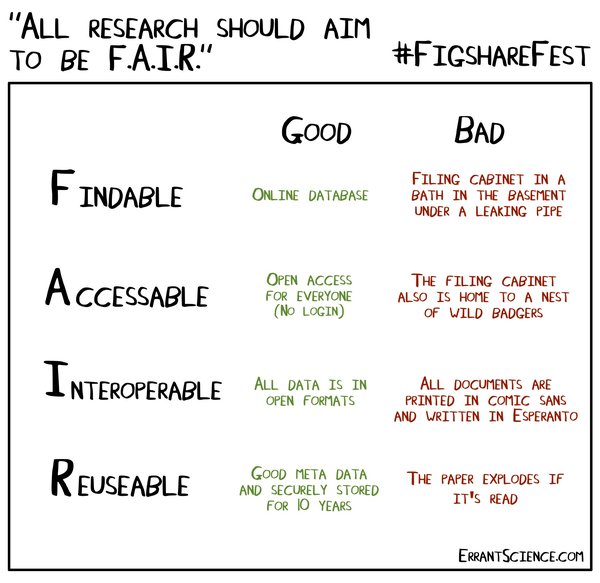
This week is the first half of sharing research responsibly: FAIR — Findable, Accessible, Interoperable, Reusable. The slides give more detail, as well as references. The ethics of sharing — who it helps and who it can harm — is next week.
Key topics
- FAIR principles — why each one matters:
- Findable: so others (and your future self) can actually discover the work.
- Accessible: so once found, the work can be retrieved safely and clearly.
- Interoperable: so work can combine with other work across tools and languages.
- Reusable: so the community can build on it—thanks to documentation and licensing.
- Open licences and the Open Definition; when and when not to use open licences.
- Routes to open access — gold, green, diamond, and what each costs whom.
In class
Bring your annotated bibliography. We audit one source each for FAIR problems — can you find it by DOI or stable URL, can you read it, is its licence clear? — and decide whether to keep it, replace it, or cite it with its limitations stated.
Why this matters
FAIR practice makes research verifiable and sustainable: work that others can find, check and build on.
And something lighter